2026-09-29 ·
Preventing Heavy-Duty Drain Backups in Ontario Commercial & Warehouse Facilities
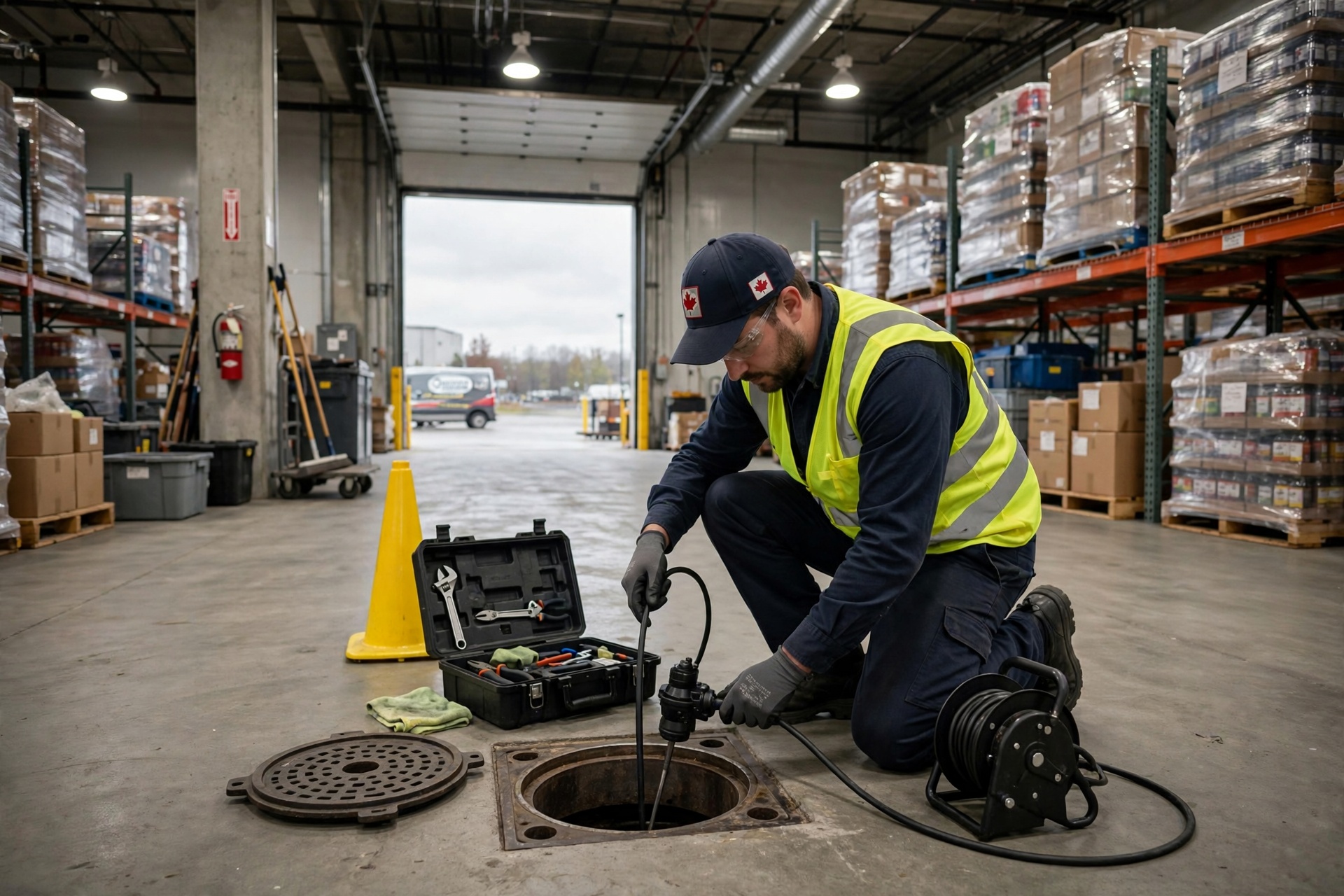
Regular commercial & industrial jetting every 6–12 months combined with sewer camera inspection stops most heavy-duty drain backups before they reach warehouse floors in Ontario. Facilities near Ontario Mills, the airport, and along I-10 see grease, sediment, and root intrusion build faster than residential lines because of higher daily water volume and older laterals installed in the 1960s–1980s. The hot-summer Mediterranean climate accelerates grease congealing during peak summer heat while mild winters allow roots from nearby park landscaping to keep growing.
Common Backup Triggers in Ontario Warehouses
Warehouses in Creekside, Guasti, and near Cucamonga-Guasti Regional Park often sit on clay or cast-iron laterals that have narrowed from internal scale. Forklift traffic and heavy pallet loads can shift soil slightly, cracking older joints and letting sediment enter during the occasional winter rain. High-volume restrooms and break-room sinks add fats and paper that form hard plugs when temperatures climb above 95°F in summer. These conditions differ from homes because a single backup can halt operations across 50,000 sq ft or more.
How Climate and Soil Affect Commercial Lines
San Bernardino County’s hot summers dry out the ground around Ontario Ranch and Armstrong industrial zones, causing minor ground movement that stresses pipe joints. Mild winters keep vegetation active year-round, so roots from street trees and park edges reach deeper than in cooler climates. When the first heavy rain arrives, loosened soil and debris wash into any existing cracks, quickly forming a blockage that standard snaking cannot clear. Storm drain & catch basin cleaning before winter reduces the volume of material that can enter the sanitary system during storms.
Maintenance Steps That Actually Work on Site
Schedule commercial & industrial jetting during low-traffic overnight hours to avoid disrupting receiving docks. Follow each jetting with a camera run to confirm no remaining scale or offset joints that could catch debris again. Install ground-level cleanouts at each building corner so crews can access the line without cutting into slab floors. Track jetting dates and footage notes in a simple log so patterns of buildup become visible over 3–5 years.
When to Add Cleanouts or Consider Lining
Mid-century buildings in North Ontario and Downtown Ontario often lack accessible cleanouts, forcing crews to work from roof vents or distant manholes. Adding cleanouts at the time of the next jetting reduces future service time by 30–50 %. For lines that show consistent root or scale issues on camera, trenchless pipe lining restores flow capacity without excavation that would interrupt warehouse operations. Properties along the I-10 corridor benefit most because traffic makes traditional digging costly and slow.
Facilities that pair scheduled jetting with camera verification see fewer emergency calls during the hottest months when grease hardens fastest. The same approach also protects storm systems around Toyota Arena and Ontario International Airport where runoff volumes spike during rare heavy rains. Keeping records of each visit helps property managers budget accurately instead of reacting to sudden shutdowns.