2026-09-29 ·
How to Spot Tree Root Intrusion in Ontario Sewer Lines
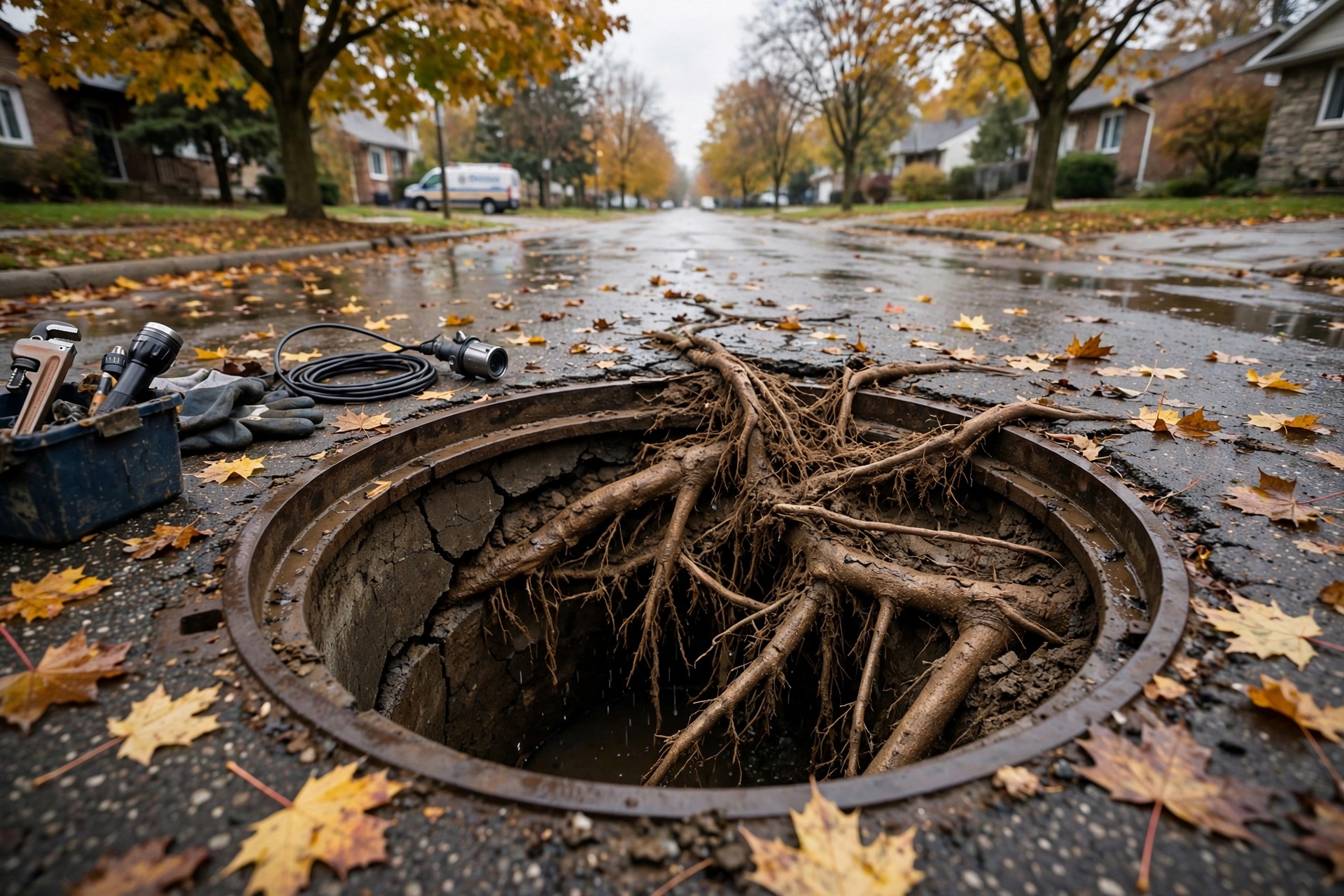
Tree root intrusion in Ontario sewer lines typically reveals itself through recurring slow drains in multiple fixtures or gurgling sounds from toilets, especially after mild winters when roots expand in search of moisture. These early signals appear more often in neighborhoods with older clay pipes such as Downtown Ontario and Guasti, where mature trees near foundations send roots toward the consistent water source inside sewer lines. Hot-summer Mediterranean conditions in San Bernardino County dry the soil in summer, pushing roots deeper toward pipes that run 8–12 feet underground.
Visible Warning Signs in Your Drains
Homeowners in Ontario Ranch and Armstrong notice repeated clogs that return within weeks despite plunging or using chemical cleaners. Gurgling noises travel up through floor drains when roots partially block flow, creating air pockets that disrupt normal drainage. In North Ontario and near Cucamonga-Guasti Regional Park, properties with large sycamores or oaks often experience backups after heavy winter rains because roots already inside the line swell with extra moisture. Foul odors rising from sinks or tubs indicate trapped waste behind root masses. These patterns differ from simple grease clogs because they affect multiple fixtures and reoccur on the same schedule each season.
Impact of Ontario's Climate and Soil on Root Growth
The hot-summer Mediterranean climate creates cycles that drive root intrusion. Summer heat bakes the ground, forcing roots to seek reliable water inside sewer pipes, while mild winters allow continued growth without frost damage. Clay-heavy soils common around Ontario International Airport and Toyota Arena retain less moisture, directing roots straight to the consistent flow inside lines. Homes near the Museum of History and Art or in Creekside see higher intrusion rates because older landscaping placed trees close to foundations. These conditions make root problems more frequent than in nearby cities such as Upland or Fontana, where different soil types slow root travel. Winter Rain and Sewer Backups in Ontario CA explains how seasonal moisture spikes worsen existing root blockages.
Older Homes and Pipe Materials in Local Neighborhoods
Many homes built before 1970 in Downtown Ontario and Guasti still contain clay or cast-iron pipes that develop cracks over decades, giving roots easy entry points. These 4-inch and 6-inch lines sit at depths where tree roots naturally concentrate during dry summers. Properties in Ontario Ranch with newer PVC sometimes avoid intrusion longer, yet roots can still enter at joints if soil shifts. San Bernardino County terrain with gentle slopes toward the airport area channels water along pipe trenches, encouraging roots to follow the same path. Residents in Central Ontario and South Ontario report more frequent issues near mature street trees planted decades ago along sidewalks.
Professional Confirmation Methods
A Sewer Camera Inspection provides the clearest view inside lines to confirm root location and pipe condition without digging. Technicians insert a camera through a cleanout and record footage showing fibrous root masses pressing through joints or cracks. This step distinguishes root intrusion from other blockages before any removal work begins. In neighborhoods like North Ontario, inspections often reveal roots from nearby park trees that have traveled 20–30 feet to reach sewer mains. The footage also shows whether clay pipes need Clay Pipe Root Removal or if trenchless options can restore flow without full replacement.
Practical Steps After Spotting Intrusion
Once signs appear, avoid repeated chemical use that can damage older clay lines further. Schedule a camera inspection to map the exact intrusion points and pipe material. For confirmed roots, hydro jetting or mechanical cutting clears the line while preserving surrounding soil stability. Properties near Rancho Cucamonga or San Bernardino benefit from follow-up inspections every 18–24 months because regional soil and tree species encourage regrowth. Early detection prevents full backups that affect multiple homes along shared laterals in older subdivisions.